
Playrooms Gameplay and Official Trailer
See how Playrooms gameplay combines ball cleanup, tool upgrades, and timed horror, with full-game footage context and launch details.
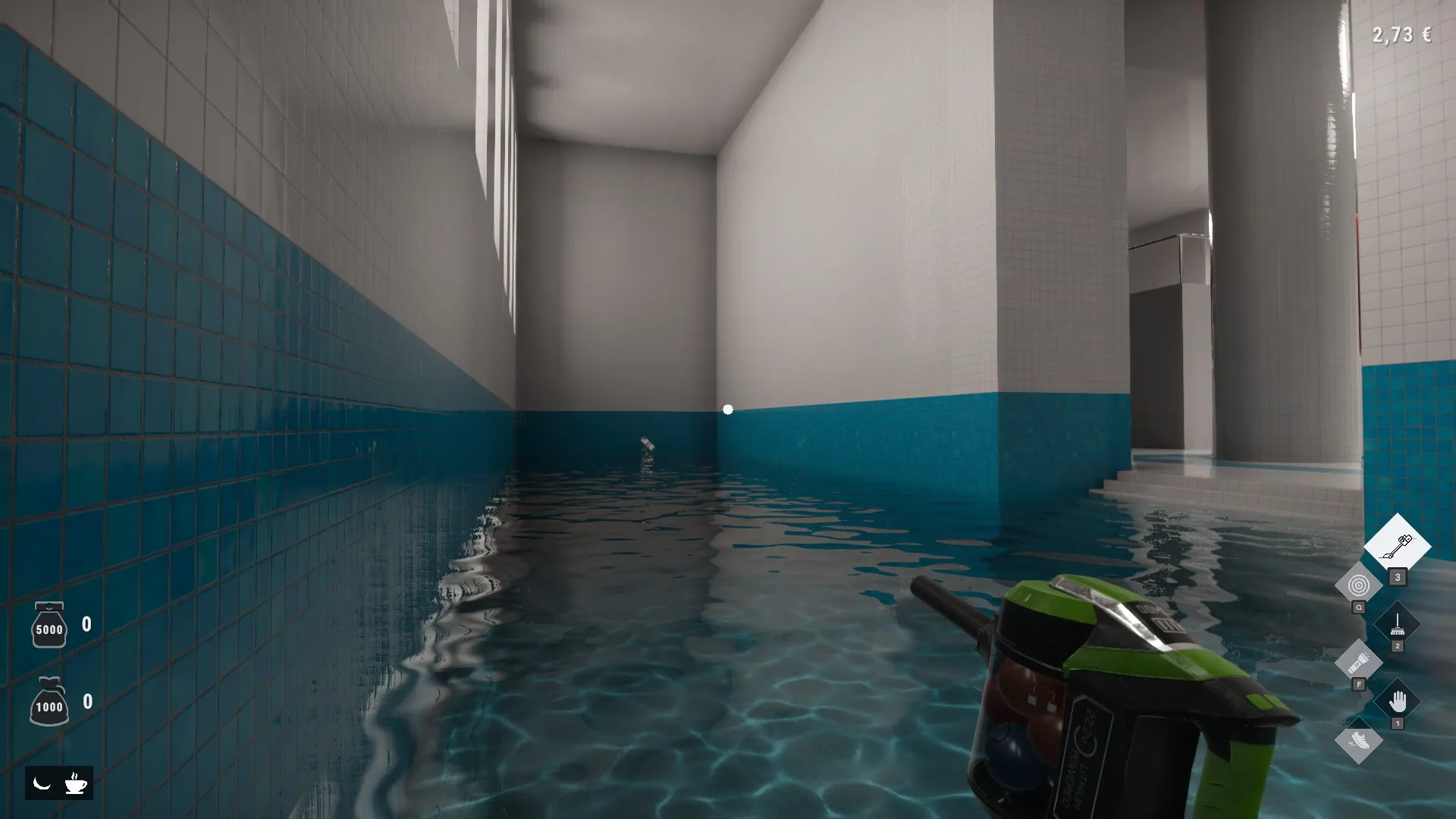
What does Playrooms gameplay actually involve?
Playrooms gameplay turns cleaning up scattered plastic balls into a race against the lights going out. Understanding that rhythm matters because collecting faster only helps if you leave enough time to get back safely. Playrooms gameplay gradually expands from picking up individual balls to sweeping huge piles, feeding collection equipment, and managing robot vacuums.
Developed by Two Pixels UG, Playrooms is a single-player Windows game released on November 4, 2026. The official Playrooms Steam listing describes more than 200,000 scattered balls, equipment purchases, unlockable abilities, and increasingly dangerous darkness.

Playrooms - Episode 1 - Full Game Release! — FalconPlaysGamesOfficial
Video source: Playrooms - Episode 1 - Full Game Release! — FalconPlaysGamesOfficial.
General full-release gameplay reference. This is not a dedicated tutorial, device test, or proof of this article’s particular mechanic. Exact patch is not identified.
The basic progression connects cleanup, earnings, and access to new spaces:
| Activity | What it accomplishes | What to watch for |
|---|---|---|
| Collect scattered balls | Moves loose balls toward storage | Early manual collection has limited capacity |
| Deposit balls into pits | Earns money in the recorded playthrough | Carrying balls and storing them are separate actions |
| Fill collection pits | Unlocks new abilities | Pit milestones affect more than the completion counter |
| Buy equipment and upgrades | Improves collection and transport | Different tools have different limitations |
| Purchase area keys | Opens further locations | Player experience also shows additional upgrade tiers becoming available |
The attraction is visible progress: a floor covered in balls becomes navigable, and a task that initially requires repeated trips becomes much faster with better equipment. Meanwhile, strange figures, unsettling messages, and the approaching blackout interrupt that routine.
The detailed examples below come from player experience in a full-game Part 1 recording. They illustrate the systems without establishing an optimal route, a complete walkthrough, or the behavior of every difficulty setting.

THE BACKROOMS NEED CLEANING, WE'RE THE GUY | Playrooms FULL GAME PART 1 — Sonoket Gaming
Earlier full-game review-copy playthrough — Sonoket Gaming. Published October 30 before public launch. The dated observations attributed to this recording are not a demonstration of the November 6 patch.
Which footage shows the full game, and what about the trailer?

Playrooms - Release Date Trailer | Clean the Backrooms before the lights go out — Two Pixels
Official historical release-date trailer — Two Pixels. Its advertised October 28 date was superseded by the actual November 4, 2026 launch. This is promotional footage, not a current benchmark or a tutorial.
The reviewed recording is titled “THE BACKROOMS NEED CLEANING, WE’RE THE GUY | Playrooms FULL GAME PART 1.” The player explicitly distinguishes this session from an earlier demo and progresses through equipment and locations beyond that demo experience.
There is an important timing detail: the player says the developer provided access before the public launch. This is full-game footage, but its exact patch version is unconfirmed. “Part 1” also matters: the recording does not show the entire game or its ending.
| Material | What it establishes | How to interpret it |
|---|---|---|
| Official Steam listing | Released game, platform, basic progression, and darkness mechanic | Primary reference for game identity |
| Full-game Part 1 recording | Manual cleanup, upgrades, automation, and several locations | Player experience from a particular build |
| Demo recollections within the recording | The player encountered different progression limits earlier | Historical context, not current full-game instructions |
| Official launch announcement | Added features and expanded full-version content | Stronger evidence for launch changes than earlier commentary |
For a useful look at Playrooms gameplay, follow the recording beyond its opening shifts. The first minutes establish collection and survival, while later sections demonstrate how sweeping and automation change the workload. Watching only the opening can leave the impression that the entire game involves collecting balls individually.
For Playrooms trailer context, the official launch announcement specifically references robots shown in the trailer. That supports automation as part of the full game, but the reviewed material does not include a separate trailer transcript for a scene-by-scene breakdown.
If an older release trailer displays a different launch date, treat that date as superseded by the storefront’s November 4, 2026 release date. Earlier promotional timing should not override the confirmed release.
How tools and upgrades change the cleaning pace
The biggest change in Playrooms gameplay is how much material you can move during a shift. Player experience shows several tools working together, with manual collection remaining useful after larger equipment becomes available.
| Tool or system | Role shown in player experience | Relevant upgrades shown |
|---|---|---|
| Manual collection | Picks up loose balls and feeds nearby storage equipment | Ball Magnet, Big Pockets, collection speed |
| Push broom | Moves groups of balls toward vents or vacuums | Load, sweep width, push tempo, flick |
| Ball vent | Transfers incoming balls into a collection pit | Suction force, throughput, intake speed, intake reach |
| Portable ball vacuum | Accepts balls and uploads them to pits; upgraded suction collects nearby balls | Upload speed, tank size, intake speed, intake reach |
| Robot vacuums | Move around collecting balls and return to docks | Battery, tank capacity, movement speed, charging, unloading |
The broom’s introduction is particularly instructive. In the recording, the newly purchased broom initially performs less impressively than the player’s upgraded hands. Later upgrades let it move much larger piles. Buying a tool and developing that tool are distinct stages of progression.
The portable vacuum produces a similar misunderstanding. The player initially treats it as extra storage, then recognizes that it transfers collected balls to the pits. Intake upgrades subsequently allow it to gather nearby balls while the player works elsewhere.
These observations support several practical priorities:
- Match upgrades to the delay you can see. A broom moving large piles does little to solve a vent that processes them slowly.
- Keep manual collection useful. The player repeatedly uses hands for scattered balls, awkward positions, and feeding the portable vacuum.
- Read the upgrade description. Intake, capacity, and upload speed affect different parts of the collection process.
- Check key requirements when upgrades stop. Several tiers remain unavailable until another area is unlocked.
- Give robots accessible work. The recording shows robots needing repositioning and sometimes becoming stuck.
Automation still involves setup. Robots need access to their docks, and the player spends time moving them between work areas. The footage supports thinking about placement and charging alongside the number of robots owned.
There is no verified universal purchase order here. The useful lesson is to identify what currently limits progress: pickup speed, carrying capacity, transport, processing speed, or travel time.
Managing shifts, darkness, and exploration
Time management gives Playrooms gameplay its pressure. In the recorded session, starting light.exe begins the working period. As the shift ends, lights go out, and the player returns to the break room.
The player selects Normal for this session. A later failure results in restarting that day, so that consequence is supported for the recorded experience. It should not be generalized to every available difficulty setting.
Different environments also change how you approach collection and movement:
| Area shown | Gameplay characteristic | Practical implication |
|---|---|---|
| Starting area | Manual collection and nearby pits establish the routine | Learn depositing and returning before exploring farther |
| Waiting area | Doors connect corridors in confusing ways; a vent handles collected balls | Learn useful connections before moving large piles |
| Back room | Dense piles and long routes increase travel demands | Allow enough time for the return journey |
| Pool rooms | Balls occupy water, edges, and elevated spaces | Combine sweeping with manual collection |
| School building | Messages prohibit running in corridors | Read local rules before relying on sprinting |
One especially useful discovery is the working-area monitor. The player initially guesses how much time remains, then activates a display showing the countdown. Once available, that information makes it easier to judge whether another trip is realistic.
Longer-day and movement upgrades also change exploration. In one sequence, the player fails to return from a lengthy furniture-collecting detour. After further upgrades and using available movement-related consumables, a later attempt succeeds.
That example supports preparing for long trips; it does not establish a universal minimum timer or stamina requirement. Route familiarity and the player’s current upgrades affect the result.
The school introduces another reason to avoid assuming every room follows the same rules. The recording includes a reprimand instructing the player to walk slowly when encountering the principal. It does not establish every trigger or punishment associated with that encounter.
Launch changes and limits of the recorded experience
When comparing Playrooms gameplay across videos, separate confirmed launch features from assumptions made during a playthrough. The official Playrooms launch announcement documents additions that matter when interpreting earlier footage.
Confirmed launch details include:
- Two-tool carrying: the announcement says players can carry two tools at once.
- Color-sorting achievement: sorting balls by color has an achievement.
- Expanded whiteboard tools: drawing options include shapes, multiple brush sizes, and undo/redo.
- Additional full-version content: five new rooms, more equipment and upgrades, additional threats, and the full story are advertised.
The color-sorting detail corrects a misleading impression from the opening commentary. The player dismisses sorting the enormous quantity of balls, but that should not become a claim that sorting is impossible. The current Steam achievement listing specifies filling one pit with a single color.
Likewise, the player’s earlier difficulty carrying particular equipment together should not override the launch announcement about carrying two tools. That feature also should not be treated as interchangeable with the separate robot-stacking upgrade discussed in the recording.
Completion needs careful interpretation, too. Filling a pit and removing every loose ball from an area are different milestones. Player experience shows the waiting area’s cleanup achievement appearing after a previously missed ball is collected. A space that looks clean may still need inspection.
The recording also contains a pool-room issue involving balls beneath the floor. Reloading and the player’s unstuck option do not resolve it in that session; broom manipulation retrieves some balls, but not all. This is player experience from that recording, not confirmation that the issue persists in the current build.
No reliable current fix is established by the reviewed material. The player’s expectations about a future fix are not patch confirmation, and the recording should not be used as a benchmark for current performance.
Related guides
- Community & Updates directory
- Playrooms Patch Notes and Launch Updates
- Playrooms Community Ball Goals and Event Rewards
Frequently asked questions
Is Playrooms gameplay mainly cleaning or horror?
Both are central. Cleaning drives earnings, upgrades, and access to new areas, while darkness creates time pressure. Player experience includes sudden appearances and jump scares during otherwise methodical cleanup. The official listing also describes selectable levels of danger.
Is Playrooms single-player or multiplayer?
The reviewed Steam listing identifies Playrooms as single-player. Robot helpers are part of its cleaning systems. The launch announcement’s shared collection event describes a global community goal, which does not establish cooperative multiplayer.
Do you have to sort every ball by color?
The reviewed evidence does not establish color sorting as a requirement for ordinary progression. The core objective is returning balls to pits. The current Steam achievement listing separately requires filling one pit with a single color for Colour is a distraction; this is not the ordinary progression rule for every pit.
Does the full-game video represent every current feature?
No. It documents a substantial Part 1 session, with access granted before public launch and an unconfirmed patch version. Use it to understand the cleaning rhythm and equipment interactions, while using official launch information for subsequently added features such as carrying two tools.
Related Articles
community
Playrooms Community Ball Goals and Event Rewards
See the confirmed Playrooms event milestones, November 15 deadline, and community reports of a free Chapter 2 reward.
community
Playrooms Patch Notes and Launch Updates
Explore the November 6 Playrooms patch, school and hotel fixes, launch additions, community event progress, and separate demo troubleshooting notes.
guides
Can You End the Day Early in Playrooms?
Can you end a Playrooms shift early? Learn why the door trick is disputed and what community reports say about PC access, saving, and waiting.
Was this helpful?
Thanks for the feedback!